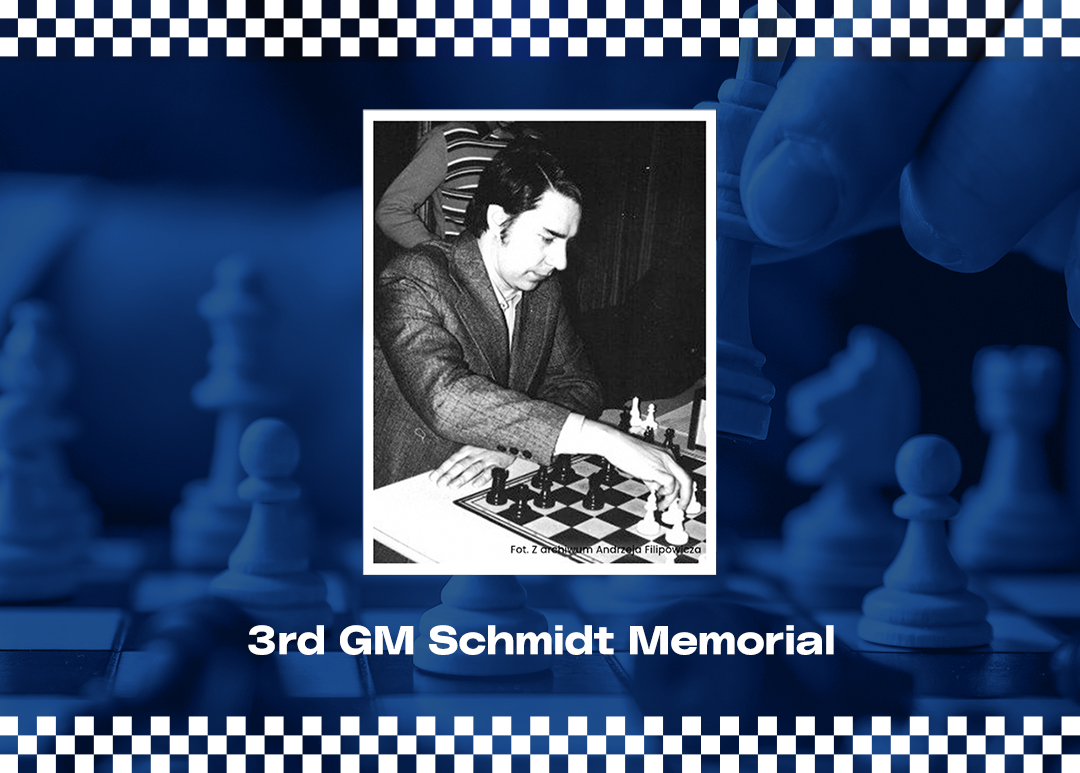
There are stories that begin with ambitious plans. This one began with ping-pong. Years later, Włodzimierz Schmidt recalled that as a boy he used to go to the leisure centre at Poznań’s “Gazownictwo,” where people played table tennis. The rules were simple: the loser was out. And when young Włodzimierz was eliminated, he would go to a smaller room next door where people played chess. As he himself said, he made up for his failures at the table by excelling at the chessboard. And he certainly did so brilliantly.
Born in Poznań, Włodzimierz Schmidt became one of the most important figures in the history of Polish chess. He was the first Polish chess player to meet the requirements and earn the title of FIDE Grandmaster. He won the Polish Classic Chess Championship seven times, represented Poland 14 times at the Chess Olympiads, and was among the absolute best in the country in blitz chess. In total, he won as many as 16 Polish championship titles.
Behind this impressive record, however, stood not only an outstanding chess player but also a man remembered by his loved ones as an exceptionally modest person. “Dad was a calm person, with a great sense of distance from himself and the world. He liked to make jokes. He was very modest despite so many successes in his profession, ” recalls his daughter, Anna Kram.
Schmidt was a symbol of work ethic, superb theoretical preparation, outstanding technique, and extraordinary reactions. He himself explained that a “chess player’s reactions” are not a simple reflex, but the ability to instantly assess a position, calculate variations, spot an opponent’s threats, and make a move—often in just a few seconds.
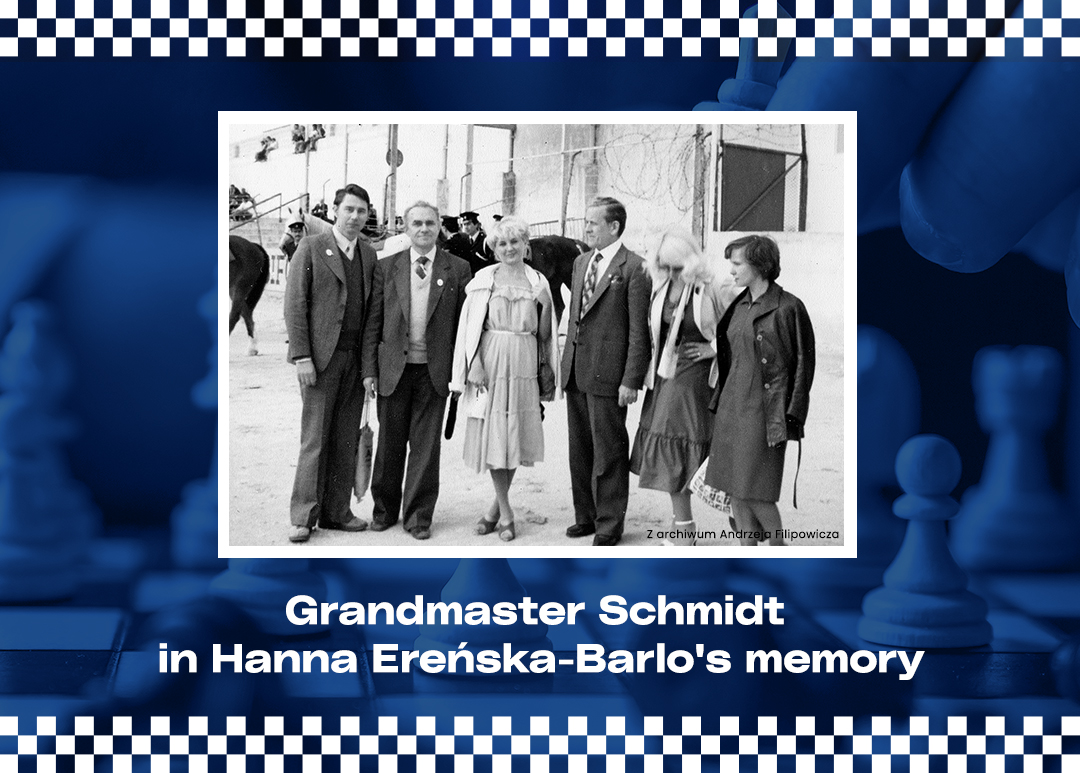
Chess was also a part of the Grandmaster’s family life. Anna Kram recalls their annual trips to a tournament in Prague. “Dad played and prepared for his next games, while Mom and I ran around the department stores—which didn’t even exist in Poland yet during the communist era.” Her father tried to inspire her love for the royal game. As a teenager, she played at the Pocztowiec chess club and also traveled with him to chess camps for women in Zakopane. “I have very fond memories of that time. Ultimately, I didn’t become a chess player; I had other interests,” admits the daughter of Poland’s first grandmaster.
For Polish chess, Włodzimierz Schmidt remains a historical figure, born in Poznań, national team member, grandmaster, coach, activist, and a man who helped shape the popularity of the sport in Poland for decades. To his family, he was first and foremost a dad and a grandpa. “I’m very proud of my dad. I always brag about him and say that I have good genes. I miss him and am grateful for the time he spent with me and my children. He was a wonderful dad and grandfather,” emphasizes Anna Kram.
As we remember Grandmaster Włodzimierz Schmidt, we recall not only his titles, medals, and athletic achievements. We remember the journey of a man who rose from a chessboard in an after-school club to a place among the pantheon of Poland’s greatest chess players, while remaining a warm, modest person who was close to his loved ones.
His memory will be honored this year in the 3rd Grandmaster Włodzimierz Schmidt Memorial. The tournament will begin on July 20 and run through July 28.